
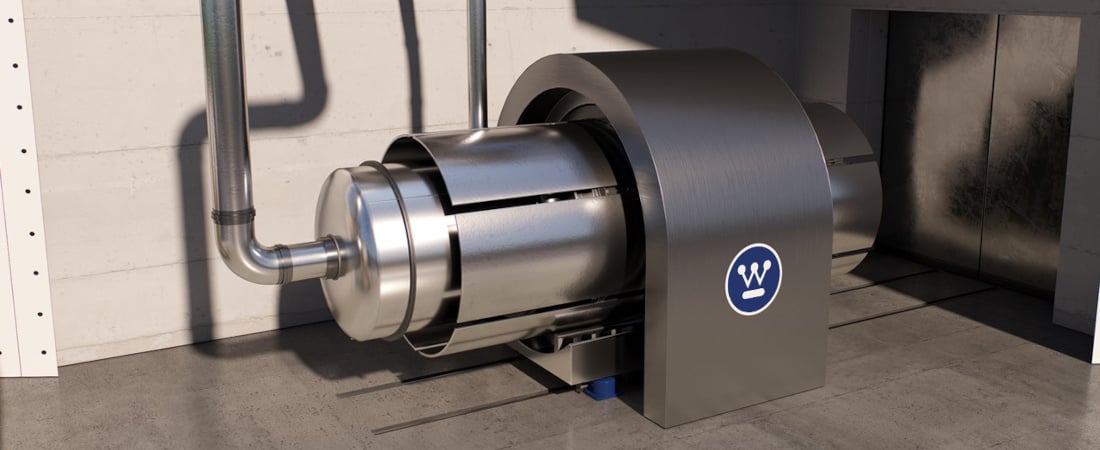
For the next frontier of nuclear, there is no substitute for putting design into practice.
That principle is at the heart of how we are developing our eVinci™ microreactor.
Our greatest advantage comes from the learnings gathered through execution and experimentation: seeing how components perform together, addressing challenges as they emerge and refining our approach with every iteration.
Rather than relying on a simple trial-and-error process, we follow a disciplined, evidence-based approach.
 Criticality testing is an important part of that process. Its value lies not simply in completing a test, but in the insights gained through the work itself.
By studying how reactor materials and components behave under carefully controlled conditions, we reduce uncertainty earlier in the development process and build a stronger path from technology advancement to repeatable deployment.
The test results:
-
Validate the performance, operability and manufacturability of the eVinci technology
-
Refine our models and help identify and address challenges early
-
Support future reactor development and licensing activities
These experiments further strengthen the technical foundation of the eVinci microreactor and support its continued development.
Bringing the eVinci Technology Into the Experiment
One of the tools helping support that effort is an experimental testbed developed at Los Alamos National Laboratory's National Criticality Experiments Research Center (NCERC).
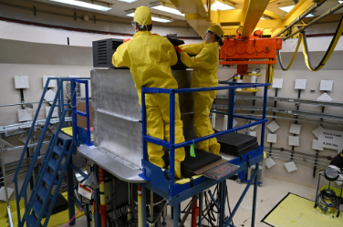 Designed to help researchers study how advanced reactor fuels and materials perform in real-world conditions, the testbed uses HALEU TRISO fuel and a flexible setup that mimics many of the environments expected in next-generation reactors.
Building on that capability, Westinghouse was selected through a U.S Department of Energy – Nuclear Regulatory Commission initiative to support an experiment tailored specifically to the eVinci microreactor.
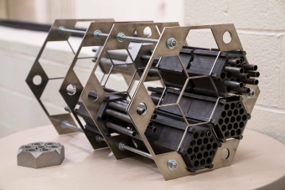
The resulting experiment incorporated key elements of the eVinci microreactor’s design, including the graphite core, heat pipe technology, control drums and supporting structures.
By validating how these components perform together and refining the design through real-world testing, we are improving our understanding of how to build and deliver the product with greater certainty.
Inside the eVinci Microreactor’s Design
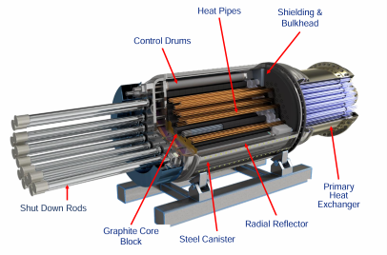
Built for safety and reliability, the eVinci microreactor uses advanced technologies such as HALEU TRISO fuel, graphite moderation, heat pipes and control drums to provide resilient energy in virtually any environment, including defense applications and space. Its compact, transportable design makes deployment fast and flexible.
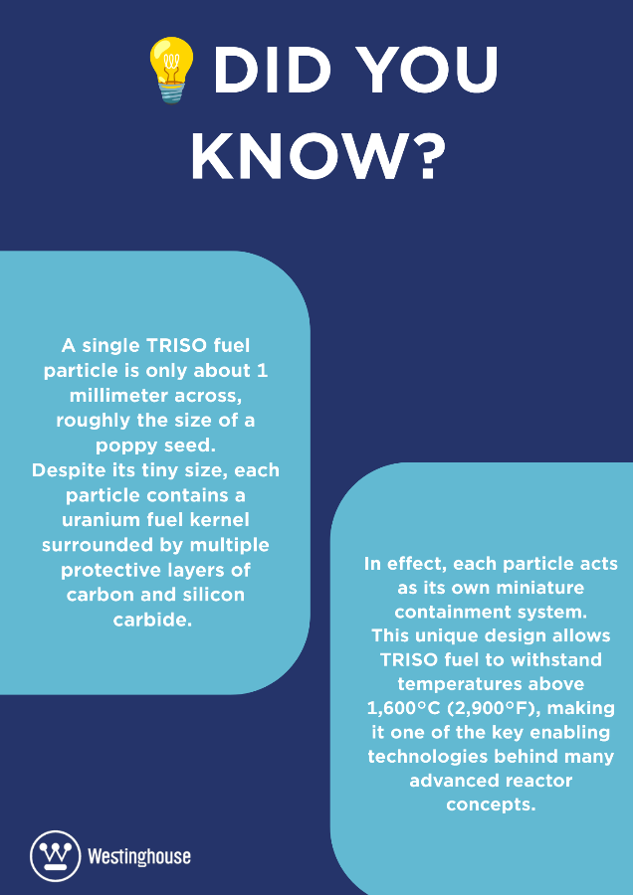
More about HALEU TRISO fuel
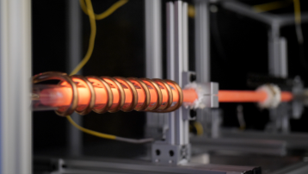
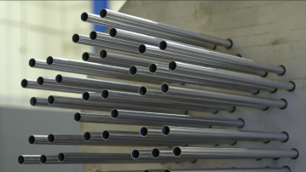
Putting the eVinci Technology to the Test
Criticality testing allows us to collect high-quality data about microreactor performance and gain valuable insights from it.
Zero-power criticality – also known as cold criticality – is a foundational step in that process. It is the point at which the technology achieves a self-sustaining nuclear chain reaction at room temperature without creating heat or electricity.
This initial test is a critical step, as it confirms the design behaves as intended and as an integrated system.
These experiments help researchers validate the eVinci technology's operability and better understand how it performs across its expected operating range.
Experimental results improve our certainty about the eVinci microreactor's ability to safely and reliably achieve its performance objectives.
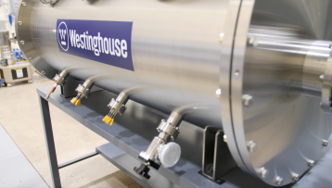 As a transportable microreactor designed to deliver reliable energy in a variety of settings, the eVinci microreactor relies on rigorous testing and validation to move from concept to reality.
More about the eVinci microreactor’s key features and market applications
With each milestone, we turn what we learn into practical improvements and build confidence that our technology can be successfully brought to life as a manufacturable product.
Achieving zero-power criticality is a significant step that contributes to the broader cycle of building, testing, learning and refinement. Each step increases certainty around cost, schedule, manufacturability and future deployment.
The results obtained will:
✅ Provide evidence that supports future licensing reviews
✅ Help turn innovative reactor concepts into practical energy solutions
✅ Help refine the eVinci design
✅ Move the eVinci microreactor closer to real-world deployment