
What You'll Learn
-
How experimental testing helps validate the predictions behind the eVinci™ microreactor
-
How a proven test platform was adapted to support the eVinci technology-focused research
-
Hot, cold and critical: what these experiments reveal about reactor behavior
-
How the resulting data helps support the future of the eVinci microreactor
How Do You Test a Reactor Before It's Built?
Before a new reactor can be demonstrated and eventually deployed, there is a fundamental question to answer:
Can our models accurately predict reality?
That is where experimental testing comes in.
By studying how reactor materials and components behave under carefully controlled conditions, researchers can validate the models behind the design and build confidence in the results long before full-scale reactor testing begins.
Why Testing Matters
Advanced reactor designs are built using sophisticated computer simulations that help engineers understand how a reactor is expected to perform. But before those predictions can be trusted, they need to be compared against real-world measurements.
That is especially true for advanced reactor technologies that use innovative fuels, materials and operating conditions, where historical data may be limited.
Experiments provide the real-world data needed to answer a critical question: Do the measurements match the predictions?
The resulting data helps:
-
Validate the performance, operability and manufacturability of the eVinci technology
-
Improve confidence in safety analyses
-
Support future reactor development and licensing activities
For the eVinci technology, these experiments help strengthen the technical foundation that supports the reactor's continued development.
Bringing the eVinci Technology Into the Experiment
One of the tools helping support that effort is Deimos, an experimental testbed developed at Los Alamos National Laboratory's National Criticality Experiments Research Center (NCERC).
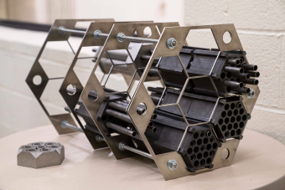
Designed to help researchers study how advanced reactor fuels and materials perform in real-world conditions, Deimos uses HALEU TRISO fuel and a flexible setup that mimics many of the environments expected in next-generation reactors.
Building on that capability, Westinghouse was selected through a Department of Energy-Nuclear Regulatory Commission initiative to support an experiment tailored specifically to the eVinci microreactor.
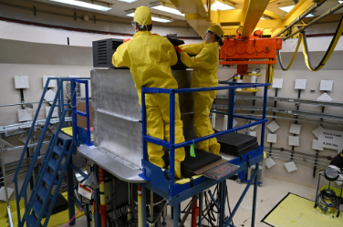
The resulting experiment, known as eDeimos, incorporated key elements of the eVinci microreactor’s design, including those associated with the graphite core, heat pipe technology, control drums and supporting structures. This allowed researchers to compare real-world performance with model predictions and build confidence in the reactor's design.
Inside the eVinci Microreactor’s Design
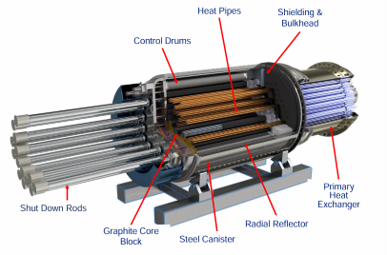
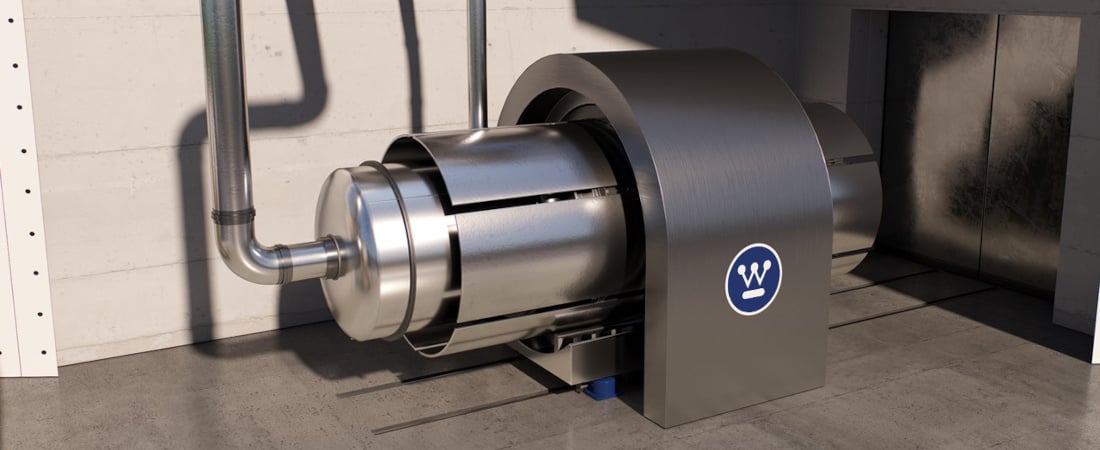
Built for safety and reliability, the eVinci microreactor uses advanced technologies such as HALEU TRISO fuel, graphite moderation, heat pipes and control drums to provide dependable power in virtually any environment. Its compact, transportable design makes deployment fast and flexible.
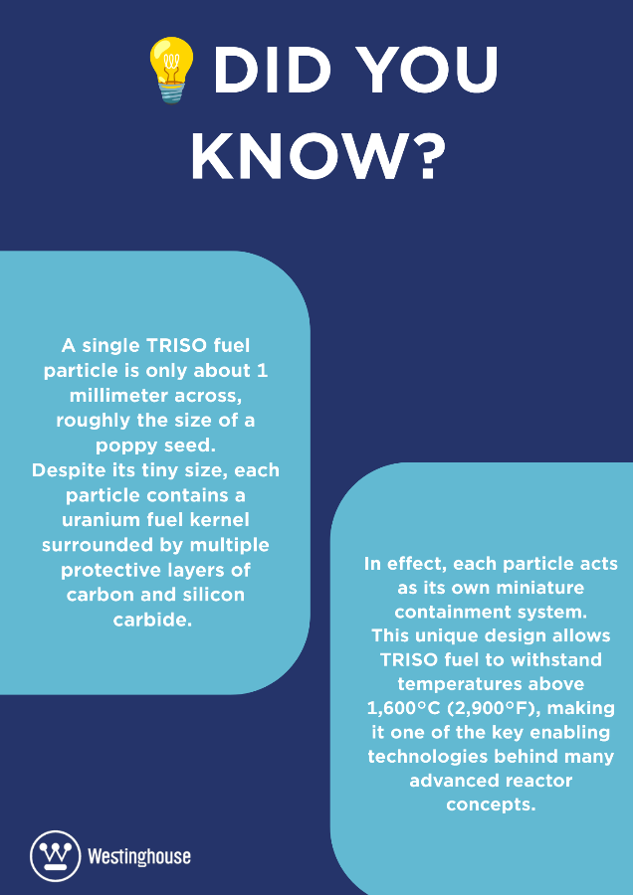
More about HALEU TRISO fuel
Measuring the eVinci Microreactor in Action
One of the key objectives of this experiment is to collect high-quality data from both cold and hot criticality tests representative of the eVinci microreactor.
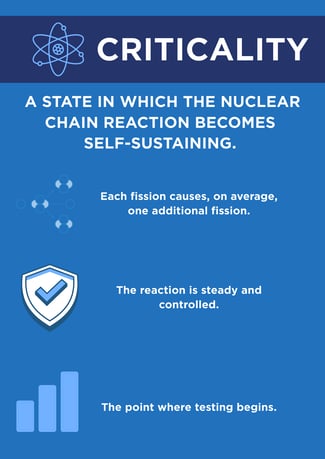
The journey begins by slowly adding fuel until the reactor reaches criticality for the first time, when the nuclear chain reaction becomes self-sustaining. Researchers then measure how the system responds under different conditions.
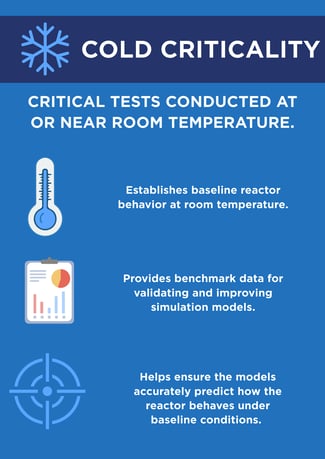
Initial tests are conducted at room temperature to establish a baseline and provide reference data for validating computer models.
As the reactor heats up, its reactivity, or the number of fissions produced from each initial fission, decreases. This passive negative feedback mechanism helps maintain reactor safety by automatically reducing the rate of nuclear reaction as temperature rises.
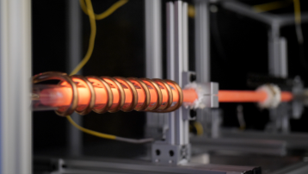
To measure the magnitude of this effect, the reactor will be progressively heated and tested at temperatures of up to 1,000°C. These conditions more closely reflect the environment in which the eVinci microreactor is designed to operate, making it the first commercial microreactor to achieve criticality under prototypical operating conditions.
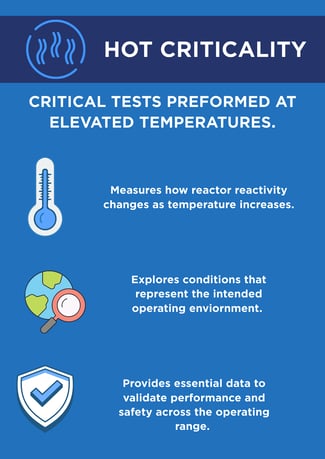
These temperature-based experiments help researchers validate the eVinci technology’s operability and understand how the reactor performs across its operating range.
What Are Researchers Looking to Learn?
-
Do experimental measurements match the eVinci technology’s predicted behavior?
-
How accurately do models capture temperature feedback effects?
-
What impact does each component have on the reactor's neutronic behavior?
Each answer helps strengthen confidence in our system design and the tools, analyses and predictions that support it.
When experimental results align with model predictions, they provide added guarantee that the eVinci microreactor’s design can safely and reliably meet its performance objectives.
Turning Predictions Into Confidence
As a transportable microreactor designed to deliver reliable energy in a variety of settings, the eVinci microreactor relies on rigorous testing and validation to move from concept to reality.
More about the eVinci microreactor’s key features and market applications
With each milestone, we turn what we learn into practical improvements and build confidence that our technology can be successfully brought to life as a manufacturable product.
Once completed, these experiments will provide real-world measurements that can be compared against predictions, helping researchers understand how closely the eVinci microreactor’s design performs as expected.
The obtained results will:
✅ Provide evidence that supports future licensing reviews
✅ Confirm important safety and performance assumptions with real-world measurements
✅ Help turn innovative reactor concepts into practical energy solutions
✅ Help show that the eVinci technology performs the way engineers expect
✅ Move the eVinci microreactor closer to real-world deployment.