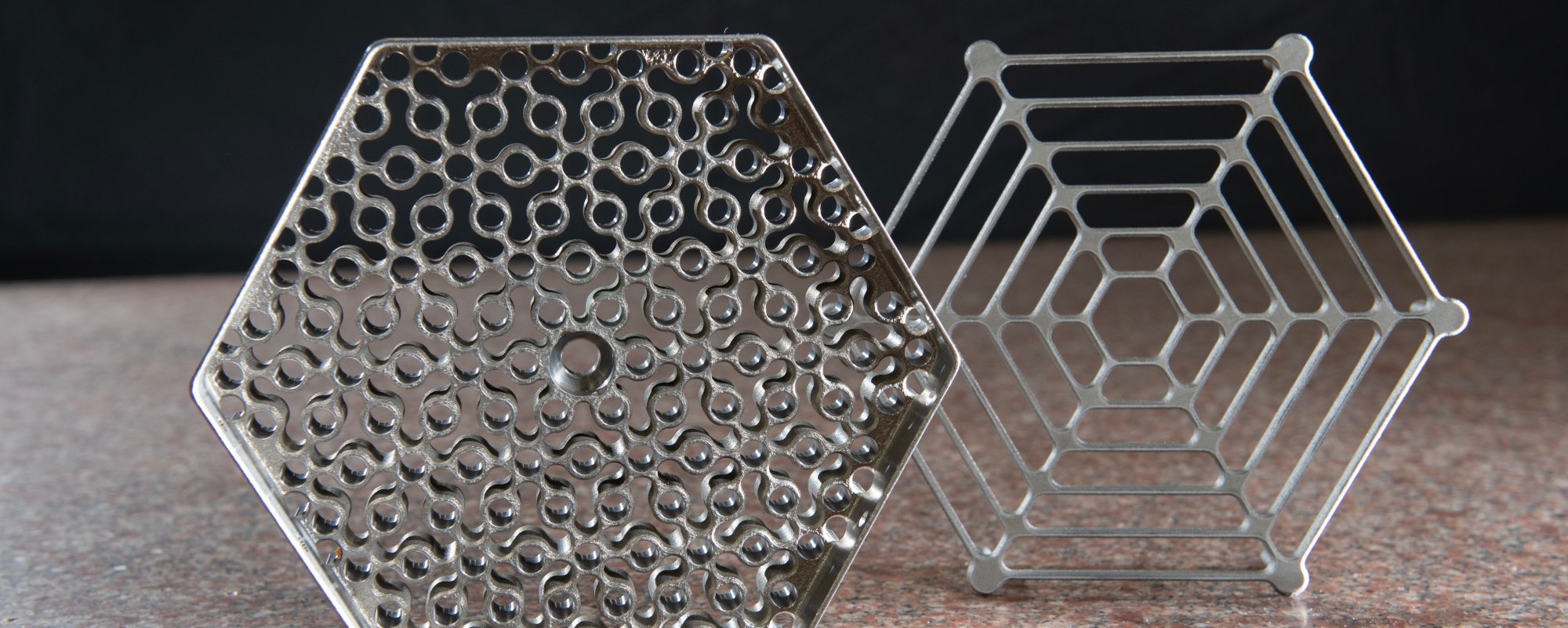
For decades, the nuclear industry followed a familiar path: machining massive metal blocks into precise, safety critical components. This approach was reliable, but it came at a cost: slow production, significant material waste and limited design flexibility.
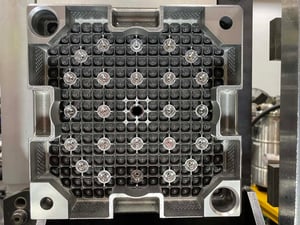 Additive manufacturing (AM), or 3D printing, breaks away from this tradition. Building parts layer by layer with microscopic precision, AM makes advanced geometric shapes possible while dramatically improving delivery times and efficiency.
Westinghouse recognized this potential early and took a leadership role, transforming additive manufacturing from an emerging concept into a game-changing manufacturing capability.
What is Additive Manufacturing?
Additive Manufacturing is a cutting‑edge production process that transforms digital designs into physical components, but unlike traditional manufacturing—which forms shapes by cutting, machining or removing material—AM takes the opposite approach:
It uses a high‑powered laser or electron beam to fuse ultra‑fine metal powder into solid material, one thin layer at a time.
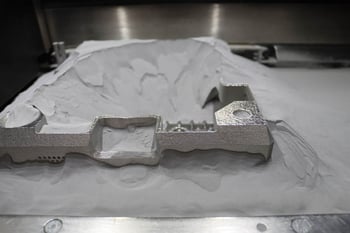 This approach unlocks design possibilities that are impossible with conventional methods, including:
-
Intricate internal passageways
-
Complex geometries
-
Integrated features that would normally require multiple parts and welds
AM also supports rapid iteration, allowing engineers to move quickly from design concept to prototype without the long lead time and cost of traditional tooling. And because parts are built close to their final shape, the process uses less raw material and requires less machining, making production more efficient and cost‑effective.
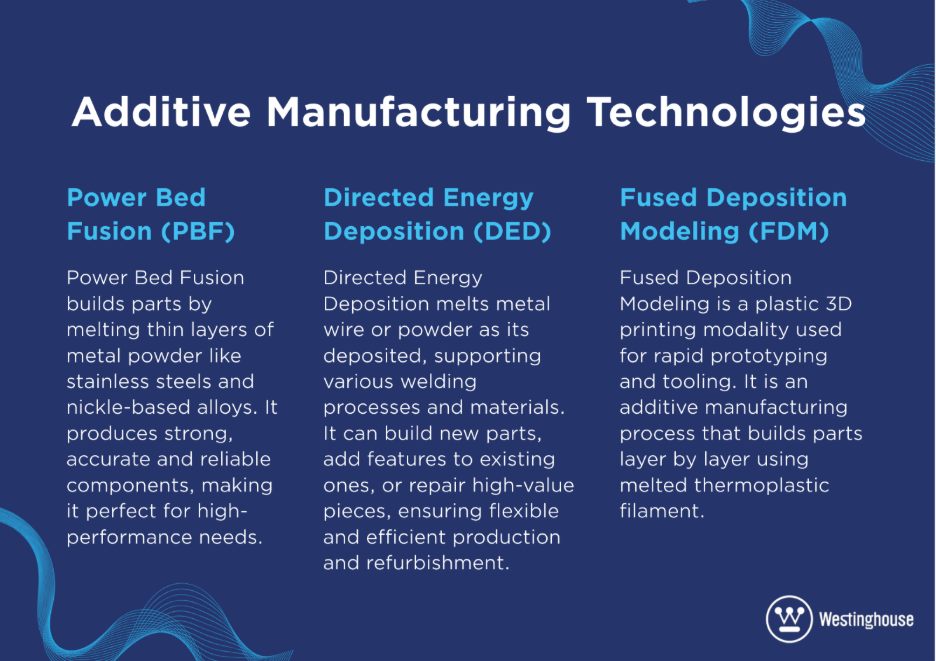
We have a “toolbox” of AM technologies, matched to each part’s size, complexity and application.
From Concept to Core: The Westinghouse Journey
The leap from 3D-printing prototypes to safety-critical nuclear hardware didn’t happen overnight. It took more than a decade of rigorous testing and validation. Through a series of industry-first milestones, we proved that additively manufactured components could withstand the extreme conditions inside a nuclear reactor.
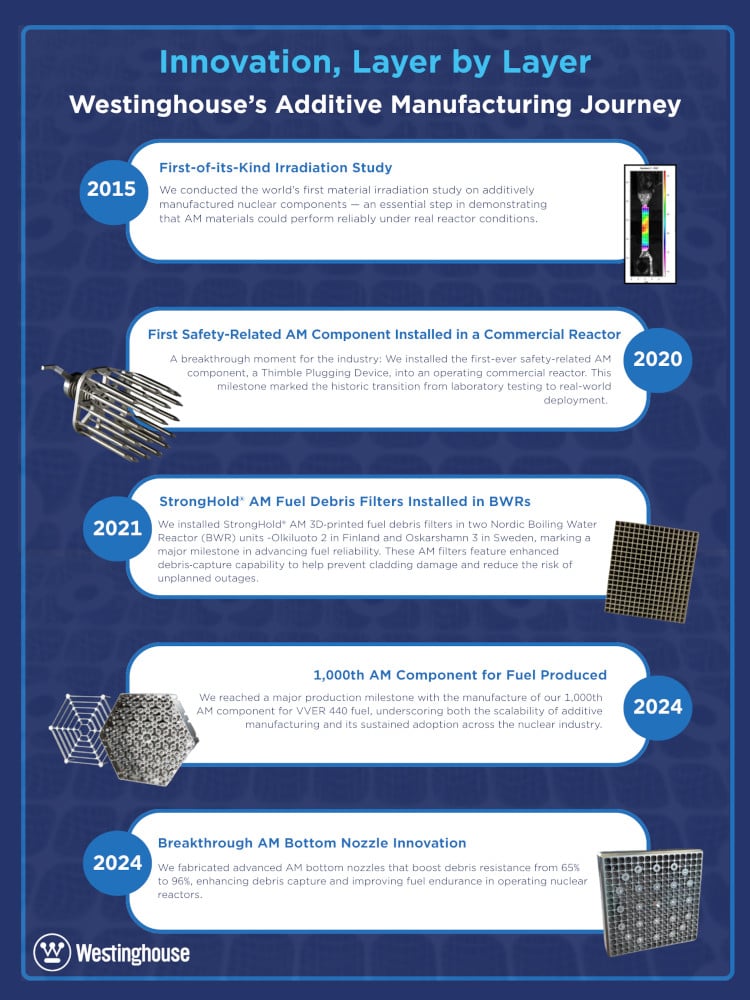
Read more about our milestones here:
-
Westinghouse Installs First-of-a-Kind 3D-printed Fuel Component Inside Commercial Nuclear Reactor
-
Westinghouse Produces 1,000th Additive Manufacturing Component for VVER-440 Fuel
The Numbers Speak for Themselves: Safer, Faster, More Efficient
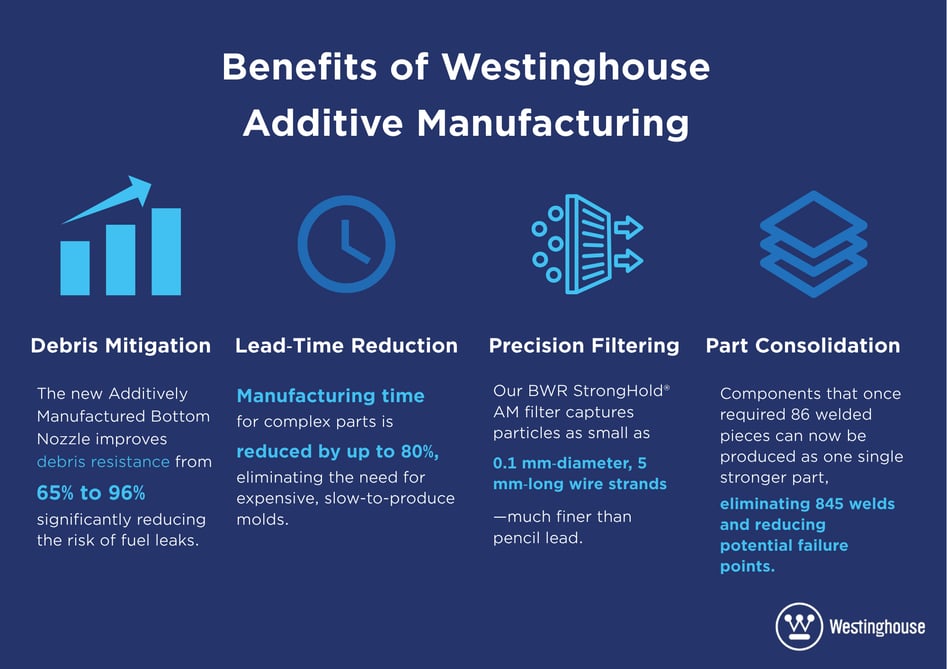
Why switch to 3D printing? Because the benefits are measurable and significant. Through additive manufacturing, we have achieved performance and efficiency gains that were once thought to be decades away.
FAQs:
Q: Is a 3D-printed part as strong as a traditional one?
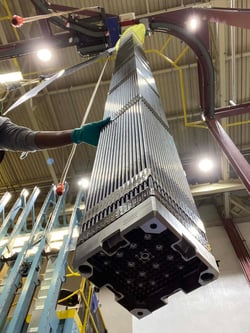
A: Yes, all 3D‑printed parts that we install in operating reactors are engineered, tested and certified to meet the same stringent safety and performance standards as traditionally manufactured components—which is why safety‑related AM parts like the fuel flow plates and bottom nozzles have been successfully deployed and put into serial production.
Q: Can you print any part of a reactor?
A: Additive manufacturing can’t yet produce every part of a reactor, but it’s already proving highly valuable, especially where complex geometries, performance‑enhancing features or part consolidation would make a meaningful impact.
And while the most safety‑critical structures are still produced with traditional fabrication, rapid advances in AM materials and qualification are steadily expanding the range of reactor parts that can be reliably printed.
Q: What does the AM process flow look like?
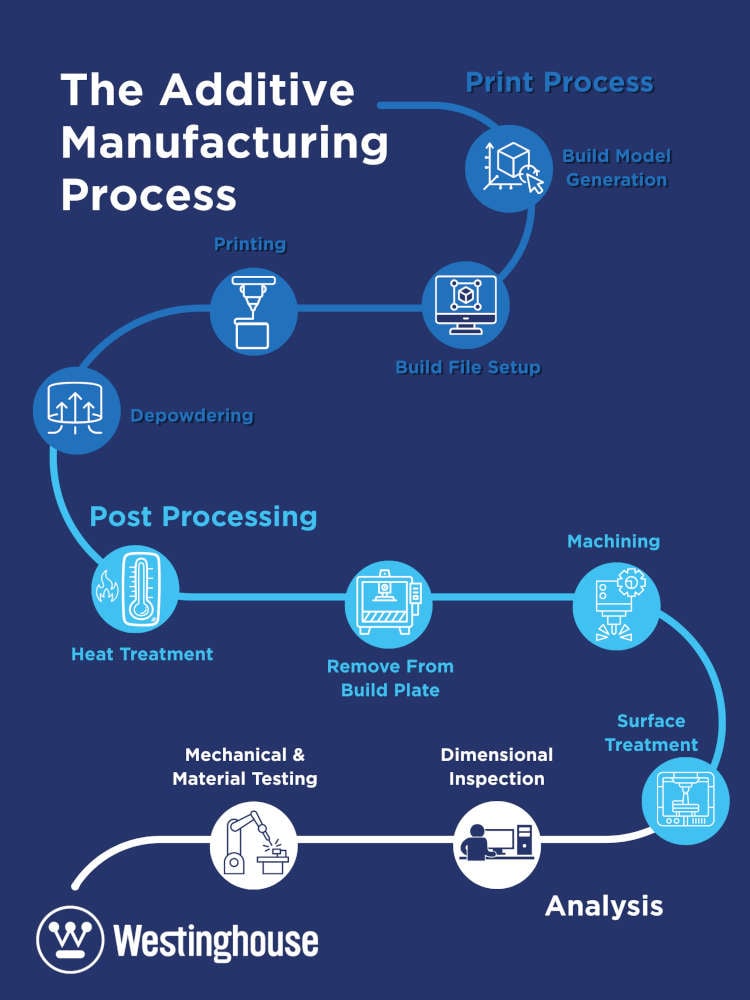
A: