
With a career defined by deep technical expertise, hands-on reactor project leadership and more than two decades of experience across engineering, licensing and global program management at Westinghouse, Luca Oriani knows a thing or two about nuclear energy. Today, as president of Westinghouse APX, a division responsible for executing new nuclear plant projects worldwide, Luca leads an organization at the center of deploying new AP1000® plants around the world efficiently and repeatably.
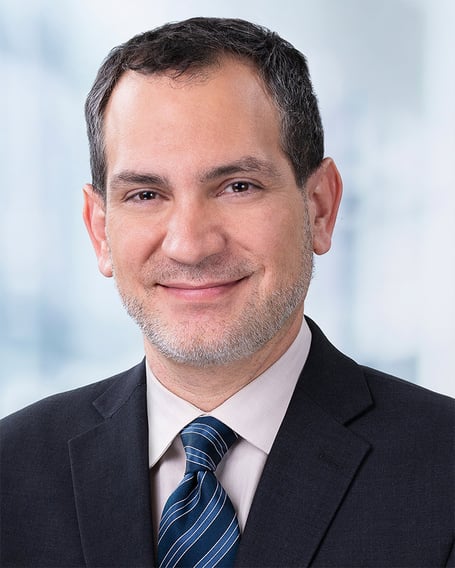
Luca Oriani, President, Westinghouse APX
Recently we asked Luca to share more about the company’s advanced AP1000® modular reactor and how the experience of delivering two of these units at Plant Vogtle in Georgia has led to a successful blueprint for implementing the technology around the globe.
Q: What is the AP1000 and what was the idea behind it?
A: AP1000 stands for Advanced Passive 1000. It is a pressurized water reactor design developed in the early 1990s to solve a big industry problem: reactors were getting safer, but also more complex and expensive. The AP1000 flips that approach. Instead of adding more pumps and systems run by electricity, it uses passive safety—gravity, natural circulation and heat transfer—to provide an even higher level of safety. The result is a simpler and compact modular design that uses about one-third less concrete and steel than traditional plants yet can deliver 1.1 to 1.2 gigawatts of electricity. Remarkably, the entire nuclear portion of the plant fits within roughly half a football field.
Q: Can you talk about the lessons you learned from the Plant Vogtle project in Georgia?
A: The biggest lesson we learned was the power of repetition. The first unit is always “first-of-a-kind,” meaning you are still completing and then validating the design. The second wave of units enters the industrialization phase, where the design is complete, validated and stable, the components proven and you are learning from operations. By the sixth to 10th units, you reach “Nth-of-a-kind,” which is series production where you are achieving the most effective delivery of the technology.
| “Just in building the second unit at Vogtle, we reduced certain construction activities by 20-40%. Once you move into repeat builds, costs drop sharply. You can think of it like you are assembling a Lego® set – the second time is dramatically faster because you already know the steps.” |
Those terms are fundamental to understanding our experience at Vogtle, where we faced significant challenges during construction of the first unit. One of the biggest learnings at Vogtle was the importance of having a stable design and detailed engineering in place before construction begins. Equally as important is gaining experience building the design. Engineers are really good at putting things on paper, but until you have welded the steel together, you don’t have the experience you need to do it quickly. That happens during the build of the first unit. For example, an AP1000 unit has about 17,000 cables and 150,000 electrical terminations. Once you’ve installed them successfully in one plant, the next builder knows exactly where everything goes.
That is the key—talking about design completion is only one aspect. A design needs three things before it can enter a true industrialization phase. First, it needs to be complete, with all construction packages released with no open items. Second, it must be validated through construction and operations. Lastly, it needs to be stable, meaning it must be controlled to minimize changes. This is not just Westinghouse’s own data and lessons learned. Almost all industrial experience shows that the lack of any of these factors result in a first-of-a-kind cost that can be two-times times higher than the true Nth-of-a-kind cost.
Just in building the second unit at Vogtle, we reduced certain construction activities by 20-40%. Once you move into repeat builds, costs drop sharply – sometimes to less than half of the first unit. You can think of it like you are assembling a Lego® set – the second time is dramatically faster because you already know the steps.
Q: What other benefits came out of the Vogtle project?
A: The Vogtle project showcased a key benefit of the AP1000, which is size. The amount of materials required per megawatt, or the size of the plant, is much smaller compared to other current or upcoming competitor designs. The cost of a nuclear power plant is not driven so much by the nuclear components as it is by the cost of labor to assemble the plant. The fewer cables, pipes, steel and concrete you have to install, the lower the cost of the plant.
.1.jpg?width=452&height=271&name=DJI_0013%20(2).1.jpg)
An elevated view of the entire Vogtle 3 and 4 construction site. ©2016 Georgia Power All Rights Reserved
With a standardized design like the AP1000, you are leveraging the benefits of a completed plant, not re-engineering it. Going into the project, you know how much copper, steel, piping and other materials are needed for the project.
And to stay with the Lego analogy, I think we all know the most frustrating thing when we build a Lego set with our kids is when you realize halfway through assembly that you don't have all the blocks you need. When you're deploying a nuclear fleet with a standardized, proven, modular design, you know you have all the components because you've already built it.
The reason China is now building AP1000 units in well under five years, from beginning to end, is because the design is completely done, validated and stable. You have all the components and the pieces needed to build the plants, a supply chain that can deliver and a site that is ready to host the plant. So, when you start construction, the risk and impact of issues that could slow you down is dramatically reduced.
Like in China, the experience at Vogtle highlighted the importance of having a robust nuclear supply chain. That’s why Westinghouse is actively working to build local and regional supply chains for new AP1000 projects. Having strong, localized manufacturing ecosystems with qualified suppliers makes projects faster, lower-risk and more economical.
Q: How well is the AP1000 performing today?
A: The AP1000 units are already achieving over 93% availability, something that older reactors took decades to achieve. We have started seeing them approach the 95-96% availability range with every outage beating the record of the previous one, which increases the plant’s performance even more.
| “The AP1000 represents a shift in nuclear engineering philosophy—simplified design, standardized modular construction, repeatable builds and localized supply chains. This formula will make nuclear faster to deploy and more affordable.” |
The reason is simple logic: fewer components mean fewer failure points. There's a term in the nuclear industry that are called SPVs or single point vulnerabilities. Those are those components that, should they fail, cause you to lose power production capability.
Today’s AP1000 is designed with a minuscule fraction of the equivalent number of SPVs that exist in the operating fleet because it has so many fewer components. As a result, we’re seeing dramatic differences in availability and performance in the AP1000, as well as reduced cost of and simplification of operations compared to other technologies.
This is actually an area where some hard lessons learned give us even more confidence. Not only have we seen a dramatic reduction in SPVs, but we’re also benefiting from years of operating experience. The AP1000 fleet now has over 40 years of cumulative operations, showing that even 93% availability can be improved significantly. We've learned valuable lessons from operating and maintaining these plants over time, and we've used those lessons to strengthen reliability, improve performance, and reduce the likelihood of repeat issues. In fact, it not only shows how the fleet operation of existing units has achieved outstanding best-in-class performance by a large margin, but also that this is just the beginning.
Q: What is next for the AP1000 in the next five to 10 years?
A: The AP1000 represents a shift in nuclear engineering philosophy—simplified design, standardized modular construction, repeatable builds and localized supply chains. This formula will make nuclear faster to deploy, more affordable and central to meeting future global energy demand.
This is reflected in nuclear plant construction in two ways. The first is the regionalization of manufacturing capabilities to build AP1000 units. While the next AP1000 units will use a globally standardized reactor design, regionally localized manufacturing ecosystems will enable multiple fleets of reactors to be built simultaneously around the world. Regional supply chains reduce risks, shorten delivery times and provide economic support in host countries. For the AP1000, our “we buy where we build” approach is not a catchy commercial slogan—it is our delivery approach.
The second is on the labor side with an increase in high-tech construction jobs. When I'm asked what's the most precious commodity in the Western world, it's not steel, copper or uranium. It's skilled tradespeople. The future of nuclear construction will depend on workers using advanced tools and technology.
Westinghouse has partnered with Google Cloud to integrate AI into plant design and construction platforms, using tools like our HiVE™ and bertha™ nuclear solutions to analyze decades of nuclear engineering data to make nuclear construction more efficient, repeatable and cost effective.
I imagine a scenario, and we’re already testing some of this technology, in which welders would come to the site, badge in and wear smart glasses. Workers will be empowered by wearable technology integrated into their vests, helmets and safety glasses that will help them navigate the site and work assignments. These tools will enable a new era of nuclear construction and operation. Advanced digital, AI and simulation technologies will speed up construction planning and execution, improve plant operator training and reduce risks, cost and schedule uncertainty on new builds.