.jpg?width=2000&name=header.DAY%201%20CAM%20B.00_13_07_05.Still003%20(1).jpg "header.DAY 1 CAM B.00_13_07_05.Still003 (1)")
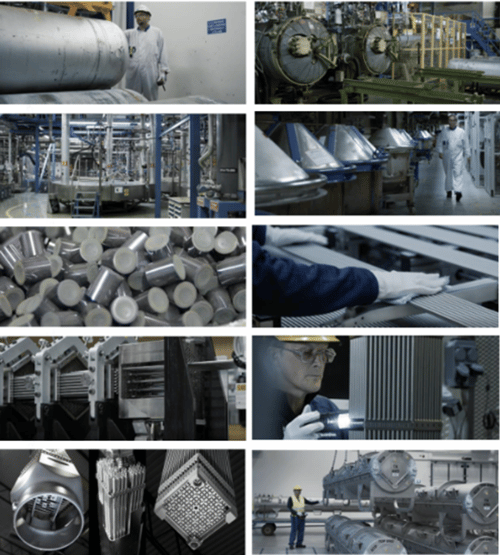
At the core of every nuclear reactor lies the most energy‑dense fuel source on Earth: nuclear fuel, composed of millions of precisely engineered uranium pellets.
Although no bigger than a fingertip, each pellet packs an incredible punch when it comes to energy production — enough, when assembled together to power homes, cities and entire regions.
What is a Uranium Fuel Pellet?
A uranium fuel pellet is small and cylindrical, made from uranium dioxide (UO₂). It is made of durable ceramic material well suited for the intense conditions inside a nuclear reactor. The uranium is typically enriched, meaning the concentration of uranium‑235 (U‑235) is increased from its natural level of about 0.7% to roughly 3% to 5%. This is commonly referred to as Low Enriched Uranium (LEU).
💡 Westinghouse has successfully deployed the first LEU+ (Low Enriched Uranium Plus) fuel to a commercial U.S. utility —using higher enrichment levels between 5% and 10% U‑235—to enable longer fuel cycles and improve plant efficiency and reliability.
This enrichment is essential for sustaining the controlled nuclear chain reaction that enables reliable, around‑the‑clock power generation.
.png?width=600&height=600&name=Pellet%20infographic%20(2).png)
From Powder to Power: How Are Nuclear Fuel Pellets Made?
Nuclear fuel starts as mined uranium ore and goes through a highly controlled, multistep manufacturing process to become durable ceramic pellets. These pellets are designed to withstand extreme heat and radiation while efficiently producing the energy that powers nuclear reactors reliably and safely for years.
.png?width=1000&height=1333&name=Fuel%20Pellet%20Manufacturing%20process%20(2).png)
How Does a Fuel Pellet Produce Energy?
While a single uranium fuel pellet is small, it’s part of a highly organized system designed to deliver enormous amounts of energy. Inside a commercial nuclear reactor, millions of pellets work together in carefully engineered structures to produce reliable, around‑the‑clock electricity.
It all starts at the atomic level.
Inside the reactor core, each fuel pellet begins doing exactly what it was engineered to do. Neutrons collide with uranium‑235 atoms within the pellet, causing them to split in a process known as nuclear fission.
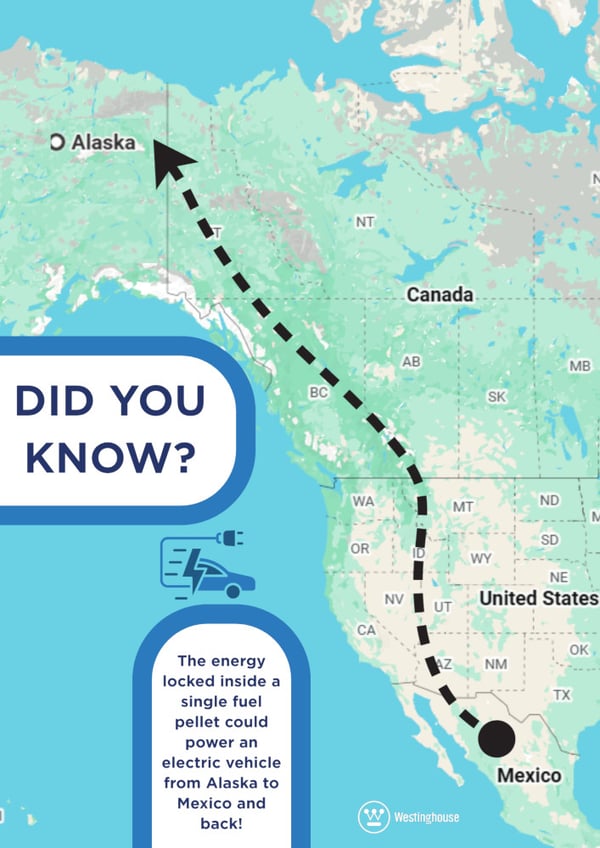
.png?width=600&height=849&name=DID%20YOU%20KNOW%20(11).png)
The heat generated by millions of these microscopic events is used to produce steam, which drives turbines connected to generators. In this way, the energy stored within a small ceramic pellet is transformed—step by step—into reliable, safe electricity that powers entire communities.
Energy Density: How Much Energy Does One Pellet Produce?
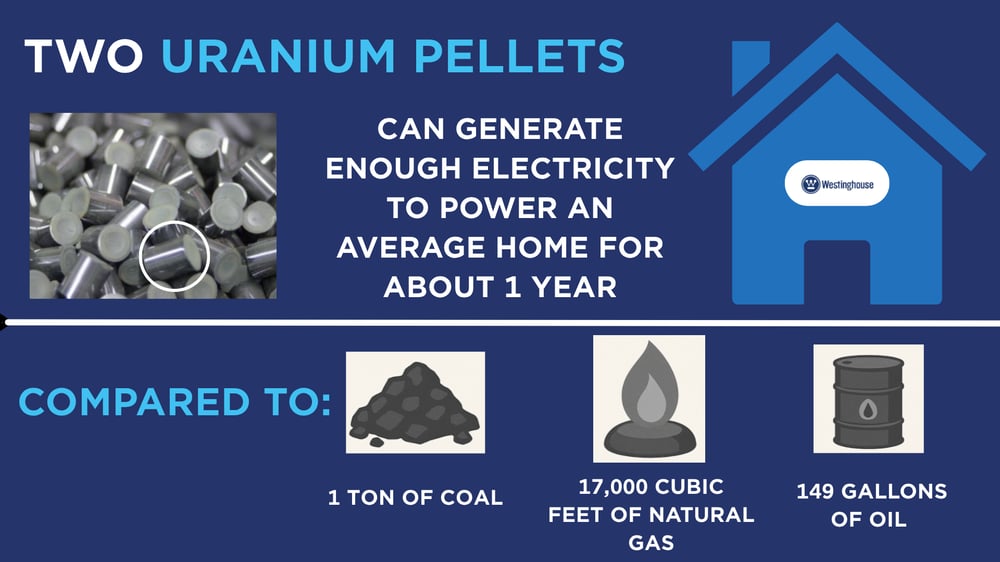
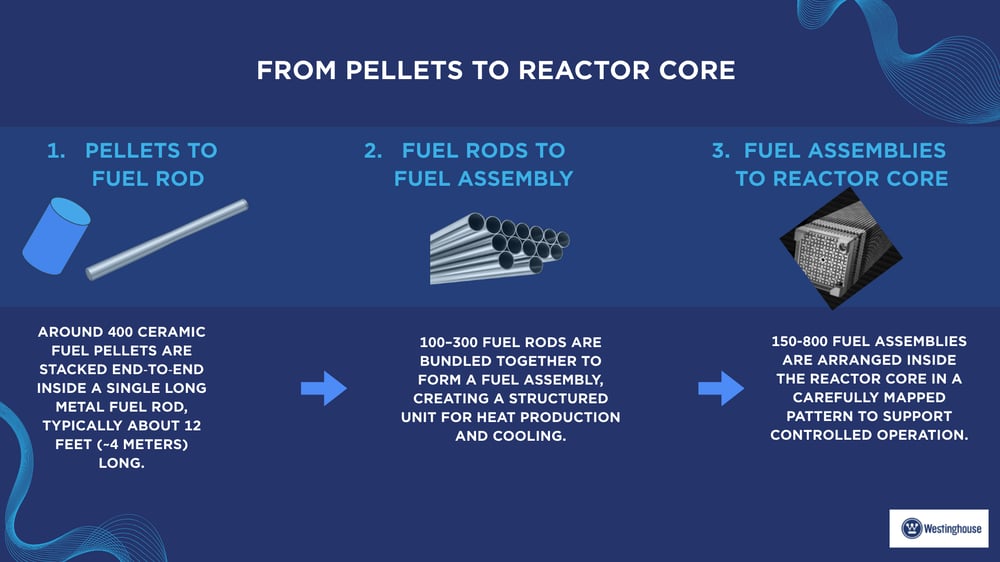
Millions of Pellets, One Powerful System: How Do Fuel Pellets Power a Reactor?
A typical large reactor core contains well over 15 million fuel pellets, with the exact number depending on the reactor design and the number of fuel assemblies used. These pellets aren’t used individually—they’re precisely stacked and organized to ensure safe and efficient energy production.
Are There Different Types of Fuel Pellets?
.png?width=206&height=124&name=Picture3%20(1).png) Yes. At Westinghouse, we use both traditional uranium dioxide (UO₂) fuel pellets and ADOPT™ fuel, depending on customer needs and reactor design.
Yes. At Westinghouse, we use both traditional uranium dioxide (UO₂) fuel pellets and ADOPT™ fuel, depending on customer needs and reactor design.
ADOPT fuel is an improved version of standard UO₂ pellets, designed to enhance performance, efficiency and safety while maintaining compatibility with existing reactor technologies. It can be used in Pressurized Water Reactor (PWR) and Boiling Water Reactor (BWR) designs.
👉 Learn more about ADOPT fuel and our High Energy Fuel Program—a comprehensive suite of technologies and solutions supporting safe, efficient and carbon-free energy globally.
What Happens to Fuel Pellets After They’re Used—and Can They Be Recycled?
Uranium fuel pellets typically spend four to eight years inside a reactor, where they gradually lose efficiency in sustaining a nuclear chain reaction. At that point, they are classified as used (or spent) fuel.
Still safely sealed within fuel rods and assemblies, the pellets are removed from the reactor and placed in deep, water‑filled pools, where the water both cools them and provides radiation shielding. After cooling, they are often moved to dry cask storage—robust, sealed containers designed to store fuel securely for decades. In some countries, final depositories are being prepared deep underground to permanently store the spent fuel.
Importantly, used fuel still contains valuable uranium. Through reprocessing, a portion of this material can be recovered and reused in new fuel, helping reduce waste and maximize the energy extracted from each pellet—making nuclear energy even more efficient and sustainable.
💡 Fun fact: With advanced recycling and next‑generation reactors, much of the world’s future energy demand could be met using uranium that has already been mined—turning used fuel into a long‑lasting energy resource.
.1.jpg?width=500&height=282&name=DAY%201%20CAM%20A.00_14_09_24.Still011%20(1).1.jpg)
.1.jpg?width=500&height=282&name=DAY%201%20CAM%20A.00_13_14_12.Still009%20(1).1.jpg)
.1.jpg?width=500&height=282&name=exportStillsFromVideos_westinghouseElectric_202505-17-2%20(1).1.jpg)
.1.jpg?width=500&height=282&name=exportStillsFromVideos_westinghouseElectric_202505-23%20(1).1.jpg)
Nuclear fuel pellets may be small, but their impact is anything but. Engineered with precision and designed to unlock the energy contained within uranium atoms, each pellet plays a critical role in delivering reliable, safe, low‑carbon electricity to millions of people around the world.