
eVinci test reaches criticality at 663°C and peak core temperature of 1,011°C, turning physics into evidence and accelerating the pathway to microreactor commercialization
Cranberry Township, PA, September 15, 2026 – Westinghouse Electric Company has successfully completed zero-power high-temperature criticality testing for its eVinci™ microreactor, a defining milestone in the program’s build-test-learn development journey. The work was completed in partnership with Los Alamos National Laboratory and the Nevada National Security Site (NNSS) at the National Criticality Experiments Research Center (NCERC), a National Nuclear Security Administration (NNSA) capability in Nevada.
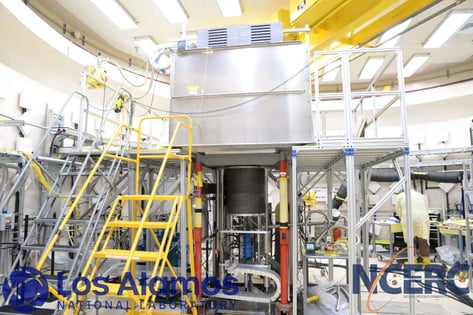
The Westinghouse eVinci™ microreactor test successfully reached zero-power high-temperature criticality at 663°C and a peak core temperature of 1,011°C, turning physics into evidence and accelerating the pathway to commercialization.
On September 3, 2026, the eVinci test reached criticality at 663°C and Westinghouse researchers successfully made a subcritical reactivity measurement at a peak core temperature of 1,011°C, a record high temperature for a reactivity measurement at NCERC. These achievements generated high-quality, temperature-dependent data to further strengthen analytical models and accelerate prototype design. This continues the experimental work started with the recent eVinci zero-power criticality testing and advances the understanding of how the eVinci design behaves as representative materials are heated toward operating conditions.
This milestone reflects Westinghouse’s iterative, evidence-based development model that reduces technical risk and provides significant confidence in the performance, cost and deployment of the eVinci technology. By leveraging its advanced simulation, digital engineering and proprietary artificial intelligence tools, Westinghouse is accelerating innovation from breakthrough technology to commercial deployment.
“For nearly a century, Westinghouse pioneers have not waited for the future of nuclear energy – they have engineered it. This milestone brings that same spirit to the eVinci program,” said Dan Sumner, Westinghouse President and Chief Executive Officer. “Our teams are rapidly building, testing, learning and improving advanced nuclear technologies, turning uncertainty into validated evidence and strengthening the design for a highly-deployable advanced microreactor solution for our customers. We appreciate the strong support of the U.S. Department of Energy, NNSA, Los Alamos National Laboratory and NNSS in helping us advance this important work.”
“American innovation has always been the driving force behind American energy dominance,” said acting Deputy Assistant Secretary for Nuclear Energy Chimi Zacot. “Westinghouse’s progress on the eVinci microreactor is another great example of that ingenuity at work. Thanks to President Trump’s leadership, momentum around America’s nuclear renaissance continues to build.”
The eVinci microreactor combines advanced heat pipe technology, TRISO fuel, a graphite core and a compact architecture designed to provide resilient energy in remote and challenging environments, such as defense applications and space. The simple design builds on decades of industry-leading Westinghouse innovation to provide resilient electricity 24 hours a day, 7 days a week for eight years without refueling.